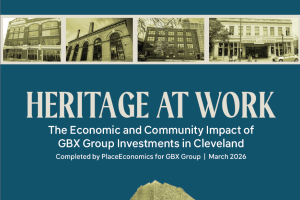
For more than two decades, GBX Group has played an important role in the revitalization of Cleveland by transforming historic buildings into productive community assets. Through a strategic focus on preservation and adaptive reuse, GBX Group has helped bring new life to underutilized and vacant properties across the city, demonstrating how historic buildings can serve as powerful drivers of economic and community renewal.
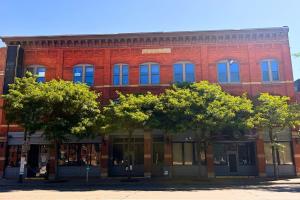
Built in 1889, the Utica Block (Park Hotel) is a three-story orange brick commercial building located within the Lower Prospect/Huron Historic District in the historic Gateway District. Designed by an unknown architect, the corner structure features facades articulated by low-relief engaged piers, segmental arched windows, and a large, densely bracketed cornice.
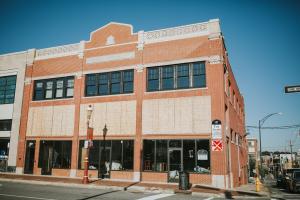
The Efird Building, a three-story brick structure in Winston-Salem, stands as a testament to the city’s commercial and architectural history. Built by Francis B. Efird and later operated by his sons, it housed the city’s oldest grocery store until 1955.
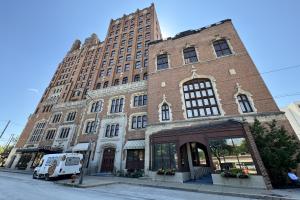
Constructed in 1929, the Cleveland Club - later known as the Tudor Arms - reflects the Tudor and Gothic Revival styles of architecture. Designed by Meade & Hamilton, the eleven-story, steel-frame building is clad in brick and limestone, accented with carved stone detailing, octagonal turrets, and a crenellated parapet.
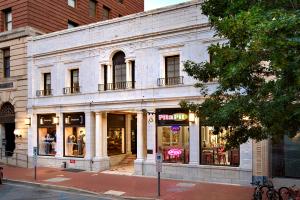
Constructed in 1912, the Arcade Building reflects the Italian Renaissance Revival style of architecture. It has a terra cotta and marble facade with an iron and reinforced concrete structural system. Columbia’s only arcade, it is a two-story, L-shaped building with facades on both Main and Washington streets.